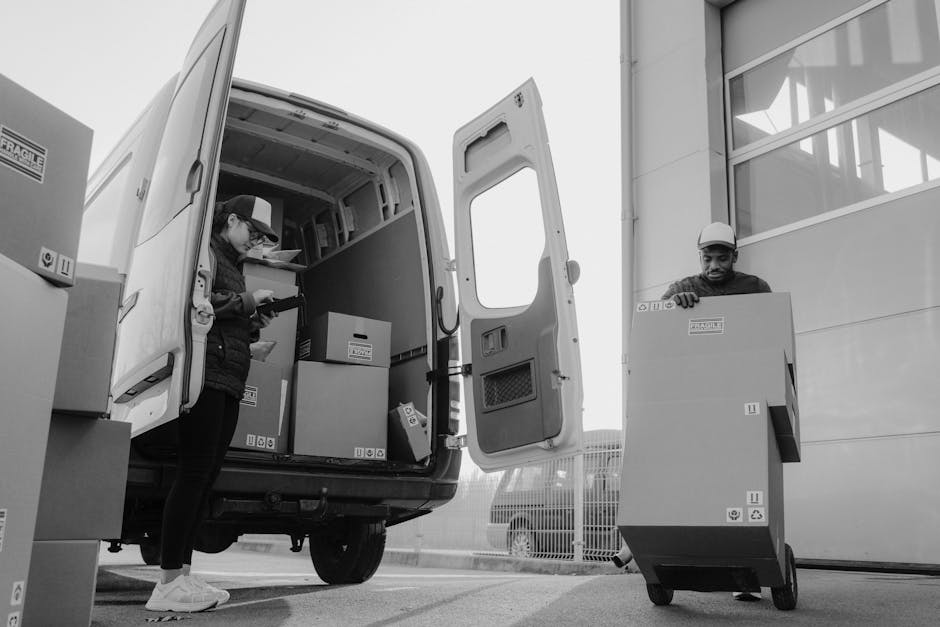
University of Roehampton man with van moving tips
If you are planning a move around the University of Roehampton, the little details matter more than most people expect. Parking, narrow access, lift availability, box labels, timing around lectures, even whether the weather turns grey and drizzly at 8 a.m. can change how stressful the day feels. These University of Roehampton man with van moving tips are designed to help you move smarter, not harder, whether you are heading into halls, leaving a student flat, or shifting furniture between local addresses.
The good news? A man and van move is usually one of the most flexible and practical ways to handle a small or medium relocation in London. It suits student moves, single-room moves, one-bedroom flats, and the sort of awkward jobs where you do not need a huge lorry but you do need careful loading and a driver who knows how to work around tight access. In this guide, you will find planning advice, packing ideas, timing tips, compliance pointers, and a realistic checklist you can actually use.
Expert summary: The best move is rarely the one with the most boxes; it is the one that is planned properly. If you prepare access, packing, and timings in advance, a man with van service becomes much simpler, cheaper to manage, and far less chaotic on the day.
Table of Contents
- Why University of Roehampton man with van moving tips Matters
- How University of Roehampton man with van moving tips Works
- Key Benefits and Practical Advantages
- Who This Is For and When It Makes Sense
- Step-by-Step Guidance
- Expert Tips for Better Results
- Common Mistakes to Avoid
- Tools, Resources and Recommendations
- Law, Compliance, Standards, or Best Practice
- Options, Methods, or Comparison Table
- Case Study or Real-World Example
- Practical Checklist
- Conclusion
- Frequently Asked Questions
Why University of Roehampton man with van moving tips Matters
Moves around a university are rarely neat. You may be dealing with limited parking, shared entrances, busy corridors, student timetables, and buildings where the lift seems to have a personality of its own. That is why University of Roehampton man with van moving tips are not just nice to have. They help you avoid the sort of last-minute issues that turn a straightforward move into a long afternoon of carrying boxes up and down stairs.
For students in particular, the move often happens at a pressure point: term dates, deadlines, part-time work, and the scramble to return keys on time. For staff or local residents, the challenge can be different but just as real. Maybe you are shifting a few pieces of furniture, perhaps moving out of a flat, or arranging a small office relocation. Either way, a van-based move works best when the route, access, and packing are thought through before the driver arrives.
There is another reason this matters. A small move can easily become expensive if it is poorly organised. Extra waiting time, wasted trips, broken items, or forgotten essentials all add friction. A bit of preparation goes a long way, honestly. You do not need a military operation, just a sensible plan and a few decent habits.
If you are comparing options, you may also want to look at broader man and van services and wider removal services to see what level of support best fits your move.
How University of Roehampton man with van moving tips Works
At its simplest, a man with van move is a coordinated load-and-deliver service. The vehicle is sized for practical domestic or student moving, and the driver helps with lifting, loading, transport, and unloading. Some jobs are simple point-to-point moves. Others need a little more structure, especially if you are moving from a campus room into a shared flat, or from a flat into storage before a later move.
Good moving tips work because they reduce uncertainty. The process usually follows the same pattern:
- Plan what is being moved and separate it from what is staying behind.
- Check access at both ends, including parking, lifts, stairs, and any building rules.
- Pack items securely and label them clearly.
- Book the right type of vehicle and allow realistic time.
- Load heavier items first and fragile items last, with proper protection.
- Unload in a way that makes settling in easier, not messier.
That sounds simple, but the difference between a smooth move and a frustrating one is usually in the detail. For example, a student moving from the University of Roehampton area may need fewer miles and less furniture, but still benefit from organised packing and a set booking time that avoids busy campus traffic. A small mistake, like not measuring a desk before the move, can become very annoying very quickly.
Where the job is slightly bigger, a larger vehicle or even a moving truck may be more suitable. For smaller moves or light loads, a compact removal van may be enough. The key is to match the vehicle to the actual volume, not the wishful version of it.
Key Benefits and Practical Advantages
There are several reasons people choose a man and van style service near a university setting. The first is flexibility. You can often book for a smaller job without paying for more capacity than you need. The second is speed. If your move is well prepared, you can often finish in one efficient run rather than stretching the process over a whole weekend.
There is also a very practical benefit for shared accommodation and student properties: less fuss. Let's face it, not everyone is moving a dining table and a wardrobe. Sometimes you just need a bed frame, a few bags, a monitor, and a pile of books moved without drama. A van move can handle that neatly.
- Lower complexity: ideal for light to medium moves and limited access properties.
- More personal handling: fewer handoffs can mean fewer opportunities for damage.
- Better for local moves: good when the distance is short but the lifting is still real work.
- Easy to scale: can suit one room, a studio, or a small flat.
- Useful for mixed jobs: furniture, boxes, bags, and awkward items can often travel together.
If you are moving out of student housing and need to clear additional items, it may also be worth considering student removals or even storage if your plans are not fully fixed yet.
Who This Is For and When It Makes Sense
This type of move makes sense for a wide range of people, not just students. In practice, it is often the best fit when the load is too big for a car and too small for a full removals crew. That middle ground is where a lot of everyday moving happens.
You might be a good fit if you are:
- moving into or out of University of Roehampton accommodation;
- shifting between shared houses or flats in southwest London;
- moving a few large items after buying second-hand furniture;
- relocating a small office, home office, or study space;
- sending items to storage during a gap between tenancies;
- replacing larger furniture and need the old pieces removed.
There is a common trap here. People assume a van move is only for "small" jobs. In reality, small can still be awkward. A bed base, three heavy boxes, a desk, and a lamp may not sound like much on paper, but if access is tight and the lift is out, the job can suddenly feel much bigger. You know how it goes.
If your move involves a flat with stairs or limited access, the relevant flat removals guidance may also be useful. And if you are leaving a house rather than a flat, the more general house removals and house removalists pages are worth a look.
Step-by-Step Guidance
Here is a practical, no-nonsense way to approach a University of Roehampton move with a van. I would not overcomplicate it. The best systems are boring in the right way.
1. Make a proper inventory
Write down what is moving. Include furniture, boxes, bags, electronics, and anything fragile. A simple list on your phone is enough. The point is to avoid forgetting the odd items that are easy to leave behind: cables, chargers, mirrors, kitchen bits, and documents.
2. Measure the awkward items
Measure anything bulky, especially beds, wardrobes, desk units, and mattresses. Then check door widths, stair turns, and lift size. This is one of the most useful moving tips, because it prevents the classic "will it fit?" moment outside the building when everyone is already tired.
3. Sort and label boxes clearly
Mark boxes by room and priority. A label like "kitchen - daily essentials" is better than just "misc." It also helps if you are unloading into a busy household and trying not to create a mountain of anonymous cardboard in the hallway.
4. Pack the van in the right order
Heavy, solid items should go in first. Softer, lighter, or more delicate items can then be layered around them with blankets, straps, or protective wrapping where needed. Good loading is about stability, not squeezing every last inch out of the space. That is a mistake people often make.
5. Keep essentials separate
Pack a small bag with keys, medication, phone chargers, water, snacks, and any important documents. If the move takes longer than expected, you will be glad you did. In the first hour after arrival, nobody wants to open six boxes just to find one charger.
6. Confirm access and timing
Check where the van can park, whether there are restrictions, and who needs to be informed. For local moves near the university, timing can make a real difference. Early mornings are often calmer. Late afternoons can be busier, and campus activity can make everything feel a bit tighter than expected.
7. Decide what needs extra care
Anything valuable, fragile, or awkward should be identified before the move starts. Glass, instruments, monitors, and framed items may need additional wrapping or special handling. For particularly delicate items, you may want to ask about piano removals or other specialist handling if relevant, even if the item is not actually a piano. The principle is the same: protect the awkward thing properly.
Expert Tips for Better Results
Here is where the small improvements add up. These are the sorts of details that save time and reduce stress.
- Book a realistic time window. Rushing creates avoidable mistakes. Build in a cushion for traffic, parking, and stairs.
- Use proper packing materials. Strong boxes, tape, wrapping paper, and blankets are worth it. The flimsy supermarket box may not survive the day.
- Take photos before dismantling furniture. A quick phone photo of a bed frame or shelving unit can save a lot of head-scratching later.
- Keep screws and fixings together. Put them in one clearly marked bag taped to the furniture or grouped with the right box.
- Protect surfaces in wet weather. London rain has a habit of appearing at the worst possible moment. Not glamorous, but very real.
- Protect your back. Bend your knees, not your waist, and don't try to hero-lift something that really needs two people.
Another useful tip: think about the destination as much as the origin. If you are moving into a shared property, decide where each item should go before the van arrives. It speeds everything up, and it stops the "where does this box go?" loop that can drag on for ages.
For packing support, these pages can help you prepare better: packing and boxes and packing and unpacking services.
Common Mistakes to Avoid
Most moving problems are preventable. They usually come from underestimating the job or assuming things will somehow sort themselves out. They rarely do.
- Underpacking fragile items: a towel around a mug is not always enough.
- Overfilling boxes: heavy boxes become unsafe fast, especially on stairs.
- Leaving the packing to the last night: that is how labels get forgotten and batteries go missing.
- Not checking parking or access: a van with nowhere to stop becomes a very expensive waiting game.
- Ignoring disassembly: if the bed won't fit through the door, you need tools and time, not optimism.
- Forgetting to separate essentials: then you are hunting for keys and toiletries at 10 p.m. in a box marked "books."
Another one, and this is a biggie: choosing the wrong moving option for the size of the load. Sometimes a standard van is fine. Sometimes you need a larger vehicle or a more complete removal solution. If you are unsure, comparing man with a van, removal van, and broader removals options helps you avoid overpaying or underplanning.
Tools, Resources and Recommendations
You do not need a van-load of specialist kit to move well. A few practical tools make the day much easier.
| Tool or item | Why it helps | Best use |
|---|---|---|
| Strong boxes | Protects contents and stacks cleanly | Books, kitchenware, personal items |
| Packing tape | Stops boxes opening mid-move | Sealing and reinforcing boxes |
| Bubble wrap or paper | Cushions fragile items | Glass, decor, electronics |
| Blankets | Prevents scratches and knocks | Furniture, appliances, screens |
| Marker pen | Speeds up identification | Labelling boxes and priority items |
| Toolkit | Helps with assembly and disassembly | Beds, shelves, desks, chairs |
For larger or more mixed moves, you may find it useful to look at furniture removals and furniture pick-up if you also need old items removed or collected.
And if you are comparing providers, make sure you review pricing and quotes alongside insurance and safety. That combination tells you more than price alone. Cheap and careless is not a bargain, however tempting it looks at first glance.
Law, Compliance, Standards, or Best Practice
For most people moving near the University of Roehampton, the legal and compliance side is fairly straightforward, but it should not be ignored. In the UK, anyone handling goods for hire should operate responsibly, maintain appropriate vehicle condition, and follow general road safety and loading rules. If you are using a professional moving service, it is sensible to ask about insurance, safe handling, and how items are protected in transit.
You should also pay attention to building rules, parking restrictions, and access permissions. These are not "formal law" in every case, but they are still rules you need to respect. A student hall, flat block, or residential street may have loading limits or time windows that matter a lot on moving day.
Best practice also means being honest about what is being moved. If you have a heavy item, a fragile item, or a load that needs two people rather than one, say so early. That helps avoid surprises, and it keeps everyone safer. The safest move is the one where nobody is improvising under pressure.
For peace of mind, it is sensible to review health and safety policy, terms and conditions, and payment and security before booking. Those pages are useful for understanding expectations, process, and how the service is set up.
Options, Methods, or Comparison Table
If you are not sure which moving option fits your situation, it helps to compare the main approaches side by side. Truth be told, the right answer depends on volume, access, and how much help you want on the day.
| Option | Best for | Strengths | Watch-outs |
|---|---|---|---|
| Man and van | Small to medium moves, student relocations, flat items | Flexible, practical, efficient | May be too small for larger household loads |
| Removal van | Compact local moves with defined load | Good for straightforward transport | Less support for larger, awkward jobs |
| Moving truck | Bigger household or commercial loads | More capacity, better for bulk | Can be more than you need for a light move |
| Full removals service | Busy moves, larger homes, complex access | More hands and more structure | Usually more expensive and more involved |
A small university move often fits the first row. A bigger family relocation, office move, or shared property clear-out may call for something more substantial, such as removal truck hire or office removals. If you are moving a business or study workspace, commercial moves and office relocation services may be the better fit.
Case Study or Real-World Example
Picture this. It is a Friday morning near the university, and a student is moving out of a shared flat. Nothing dramatic. Just a bed frame, two suitcases, five boxes, a monitor, a desk lamp, and a small set of kitchen bits. The move should be easy, right?
Well, it is easy if the boxes are packed the night before, the desk has been dismantled, and parking space has been checked. In that version of the story, the driver arrives, the load is grouped near the door, and everything is done in a tidy couple of trips. The student is out before lunch, with time to grab a coffee and breathe again.
Now compare that with the version we all dread: the boxes are still open, the mattress is unwrapped, the screws for the bed frame have vanished, and nobody knows whether the van can stop outside. Suddenly, the same move takes longer, costs more, and starts to feel much heavier than it should. Small things, but they matter.
That is really the point of good moving tips. They do not make moving magical. They just remove friction. And if you have ever spent twenty minutes hunting for tape while someone else stands in the hallway holding a wardrobe door, you already know why that matters.
Practical Checklist
Use this checklist the day before and the morning of your move. It keeps everything tighter.
- Confirm the booking time and contact details.
- Check parking and access at both addresses.
- Label all boxes by room and priority.
- Pack valuables, chargers, and documents separately.
- Disassemble furniture where needed.
- Wrap fragile items and protect furniture surfaces.
- Keep tools, keys, and fixings in one safe place.
- Clear walkways so loading is safe and quick.
- Put water and snacks somewhere easy to reach.
- Do a final room-by-room sweep before leaving.
If you are moving out of a larger space or managing leftover items, a combination of home moves and storage can make the transition far less stressful.
Conclusion
The best University of Roehampton man with van moving tips are the ones that keep the move simple, safe, and realistic. Plan the access, pack properly, choose the right vehicle, and protect the items that matter. That is the backbone of a calm move, whether you are a student, a flat sharer, or someone handling a small local relocation.
It is easy to underestimate a short move because the distance looks modest. But the real work is not the mileage. It is the lifting, the timing, the access, and the preparation. Get those right and the whole day feels lighter. A little boring, maybe. But pleasantly boring is exactly what you want on moving day.
If you want to compare service options, check availability, or plan your next move with a bit more confidence, browse the relevant service pages first and choose the support that fits your load, your property, and your timetable.
Get a free quote today and see how much you can save.
Frequently Asked Questions
What is the best way to plan a University of Roehampton move with a van?
Start by listing everything you are moving, checking access at both addresses, and packing early. The most useful tip is to organise the route, parking, and box labels before moving day, so you are not making decisions while carrying things downstairs.
Is a man and van suitable for student removals?
Yes, very often. It is a strong fit for rooms, studios, and small flats, especially when you do not need a full removals team. For university moves, the balance of flexibility and practicality is usually the big selling point.
How far in advance should I book a moving van?
As early as you can, especially during busy times such as term changes, weekends, and month-end dates. If your timing is flexible, you will usually have more choice and less stress. Last-minute bookings can work, but they are not ideal.
Do I need to dismantle furniture before the move?
Only if it helps the item fit safely through doors or into the van. Beds, shelving units, and large desks are common candidates. If you do dismantle anything, keep the screws and fittings together in a labelled bag.
How do I know whether I need a van or a larger vehicle?
Measure the larger items and count the boxes. If the load is mainly a few pieces of furniture and some bags, a van may be enough. If you are moving a full household, you may need a bigger vehicle or a more complete removal option.
What should I pack separately on moving day?
Keep keys, phone chargers, medication, documents, water, and a small set of essentials separate from the main load. It sounds obvious, but people forget this more often than you would think.
How can I make loading faster and safer?
Label boxes clearly, keep walkways clear, and place heavier items near the entrance before the van arrives. Good organisation shortens loading time and reduces the risk of knocks, slips, and rushed lifting.
Can a man with van service help with flats and stairs?
Yes, though access matters. If there are stairs, tight corners, or no lift, tell the provider in advance. That way the move can be planned properly and no one is left guessing at the door.
What if I need to store items between moves?
Short-term or longer-term storage can be useful if your moving dates do not line up neatly. This is common with student moves, gap periods, or changing tenancy dates, and it often reduces pressure on the day.
Are packing services worth it?
If you are short on time, nervous about fragile items, or handling a bigger load than expected, yes, they can be worth it. Some people enjoy packing. Most people, if they are honest, would rather do almost anything else.
What should I check before paying for a move?
Look at the booking terms, payment details, safety information, and what is included in the service. It is sensible to review pricing and quotes and insurance and safety before you confirm.
What is the biggest mistake people make with local moving tips?
Underestimating the time needed. Even a short local move can take longer than expected if parking is awkward, items are not packed properly, or the furniture has to be dismantled on the spot. A bit of slack in the schedule helps more than people realise.
For more about the company behind these services, you can also read the about us page, or visit contact us if you are ready to ask a question and get moving.